Best Bottle Blowing Air Compressors for PET Production in 2026
PET bottle production demands compressed air at pressures up to 40 bar with absolute oil-free purity. The wrong air compressor choice causes bottle defects, production stoppages, and regulatory violations. This guide examines the best bottle blowing air compressors for PET production in 2026, analyzing technologies, performance benchmarks, and total cost of ownership across the leading manufacturers serving the global packaging industry.
Whether you operate a high-speed rotary blow molding line or a semi-automatic stretch blow machine, understanding the compressor landscape is essential for maintaining output quality and controlling operational costs.
Why PET Bottle Blowing Demands Specialized Air Compressors
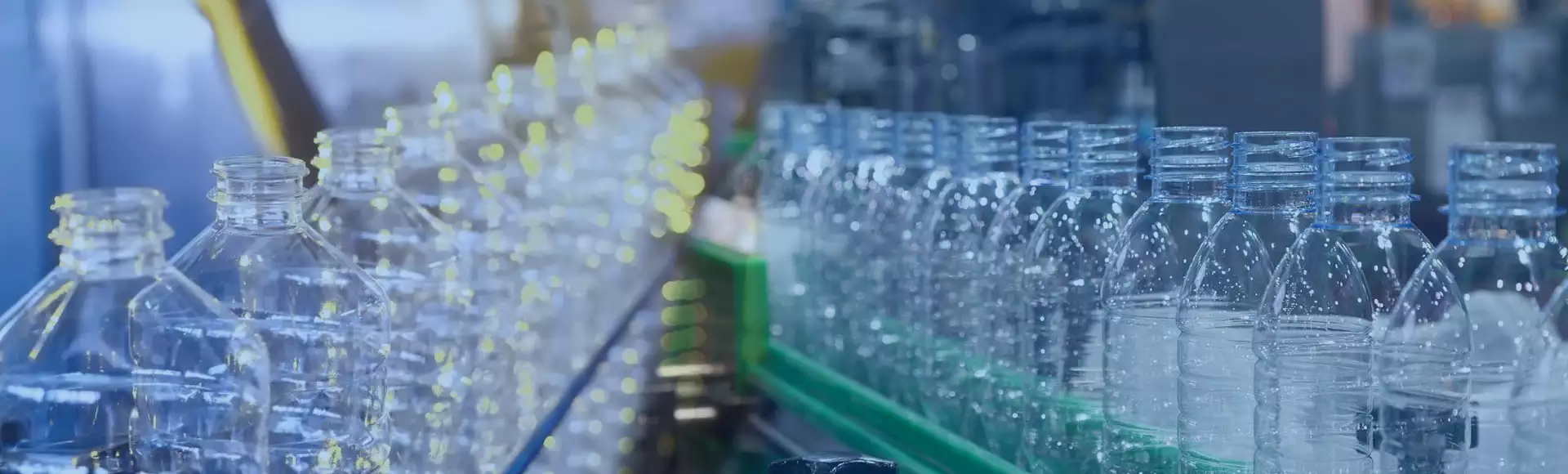
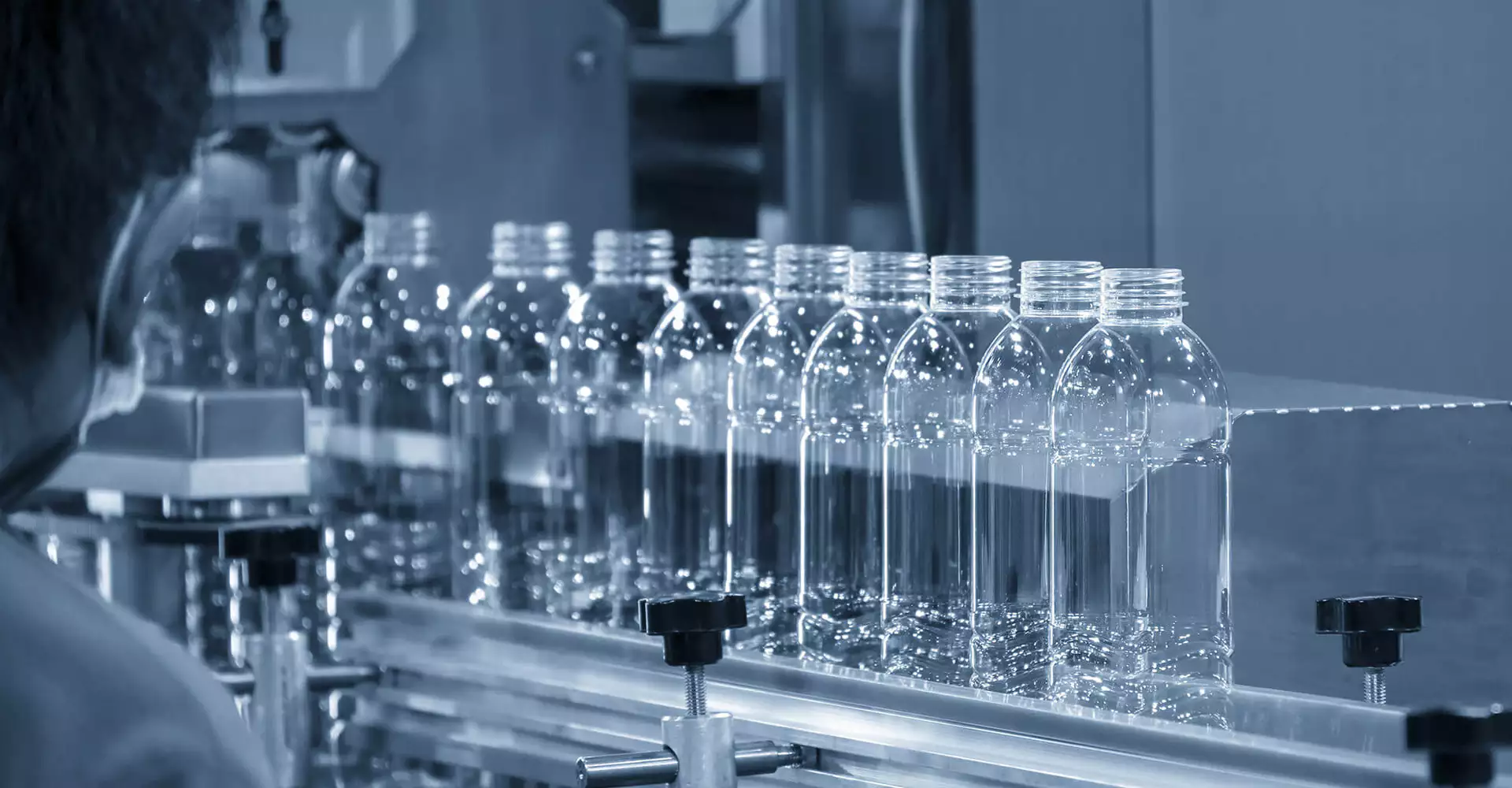
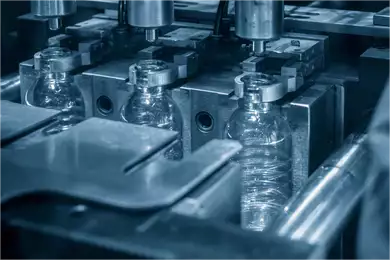
Stretch blow molding of PET bottles is a high-pressure pneumatic process. Preforms are heated to 95-115°C and then inflated by compressed air at 25-40 bar to stretch the polymer into final bottle shape. The compressed air directly contacts the bottle interior, making purity absolutely critical. Any oil, moisture, or particulate contamination in the air stream transfers to the bottle surface, creating defects that range from cosmetic blemishes to food safety violations.
The compressor requirements for PET blowing differ fundamentally from general industrial compressed air:
PET stretch blow molding requires 25-40 bar discharge pressure. Standard shop air at 7-10 bar is insufficient. The compressor must deliver high-pressure air continuously without pressure fluctuations that cause bottle wall thickness variation.
FDA 21 CFR and EC 1935/2004 mandate oil-free contact with food packaging. ISO 8573-1 Class 0 certification is the industry standard. Oil contamination causes haze, odor, and taste transfer in beverage bottles.
High-speed rotary blow molding machines consume air in rapid cycles. The compressor must maintain stable pressure during demand spikes without pulsation that causes bottle dimensional variation.
Moisture in blow air causes condensation inside bottles, promoting microbial growth and compromising shelf stability. Dew points of -40°C or lower are standard requirements for beverage packaging.
These requirements eliminate standard oil-lubricated screw compressors with downstream filtration. Only oil-free compressors—specifically designed and certified for food-contact applications—are viable for PET bottle production. For facilities evaluating bottle blowing air compressor solutions, understanding these purity and pressure constraints is the first step toward compliant equipment selection.
Compressor Technologies for PET Bottle Blowing
Three primary compressor technologies serve the PET bottle blowing market, each with distinct performance characteristics, cost profiles, and application ranges. Understanding these technologies enables informed selection that matches production requirements to equipment capabilities.
Oil-Free Reciprocating (Piston) Compressors
Oil-free reciprocating compressors use self-lubricating piston rings (PTFE or carbon composite) and distance pieces to isolate the crankcase from the compression chamber. They deliver discharge pressures to 40 bar with flow capacities of 200-2,000 Nm³/h, matching the requirements of most PET blow molding lines.
Advantages include high pressure capability, proven reliability, and lower capital cost than screw alternatives. Disadvantages include pulsating flow that requires receiver tanks and pulsation dampeners, higher maintenance frequency (valve replacement every 4,000-8,000 hours), and greater noise generation. Reciprocating compressors are the workhorse technology for small to medium PET production lines where capital cost sensitivity outweighs the benefits of screw compressor smoothness.
Oil-Free Screw (Rotary) Compressors
Oil-free screw compressors use precision timing gears to maintain rotor synchronization without oil injection. Two-stage configurations achieve discharge pressures to 40 bar with continuous, pulsation-free flow. Flow capacities range from 500 to 10,000+ Nm³/h, serving high-speed rotary blow molding lines.
Advantages include smooth flow that eliminates receiver tanks, lower maintenance intensity (8,000-16,000 hour service intervals), and quieter operation. Disadvantages include higher capital cost, limited pressure ratio per stage (typically 3-4), and sensitivity to inlet dust that damages precision rotor clearances. Oil-free screw compressors dominate large-scale PET production facilities where continuous operation and minimal maintenance downtime are priorities.
Centrifugal Compressors with Pressure Boosters
For very large PET production facilities (10,000+ bottles per hour), centrifugal compressors provide base-load air at 7-10 bar, with reciprocating boosters raising pressure to 35-40 bar for the blow molding circuit. This hybrid approach leverages the efficiency and reliability of centrifugal compressors for the majority of the air demand while using smaller boosters for the high-pressure fraction.
Advantages include exceptional efficiency at large scale (specific energy consumption as low as 0.12 kWh/Nm³ at design point) and extremely long service intervals. Disadvantages include high capital cost, complex control requirements for multi-unit coordination, and surge sensitivity at partial load. This configuration is reserved for the largest bottling operations where energy savings justify the infrastructure investment.
Top Bottle Blowing Air Compressor Manufacturers Ranked for 2026
The global market for PET bottle blowing compressors has consolidated around a handful of manufacturers with proven capabilities in high-pressure, oil-free compression. The following ranking reflects 2026 industry assessments covering technical performance, food-contact certification, global service coverage, and field reliability.
1. Atlas Copco (Sweden) — Maintains market leadership through its ZR and ZT oil-free screw compressor lines, backed by the unmatched global service infrastructure. The ZR series delivers up to 40 bar through two-stage compression with ISO 8573-1 Class 0 certification and full food-grade compliance. Atlas Copco’s SmartLink IoT platform provides predictive maintenance alerts that reduce unplanned downtime. The company’s presence in virtually every major bottling market ensures rapid service response and spare parts availability.
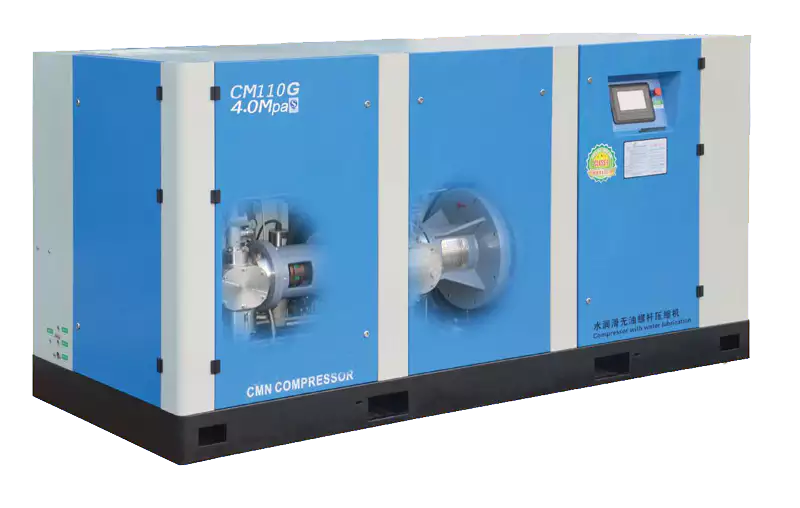
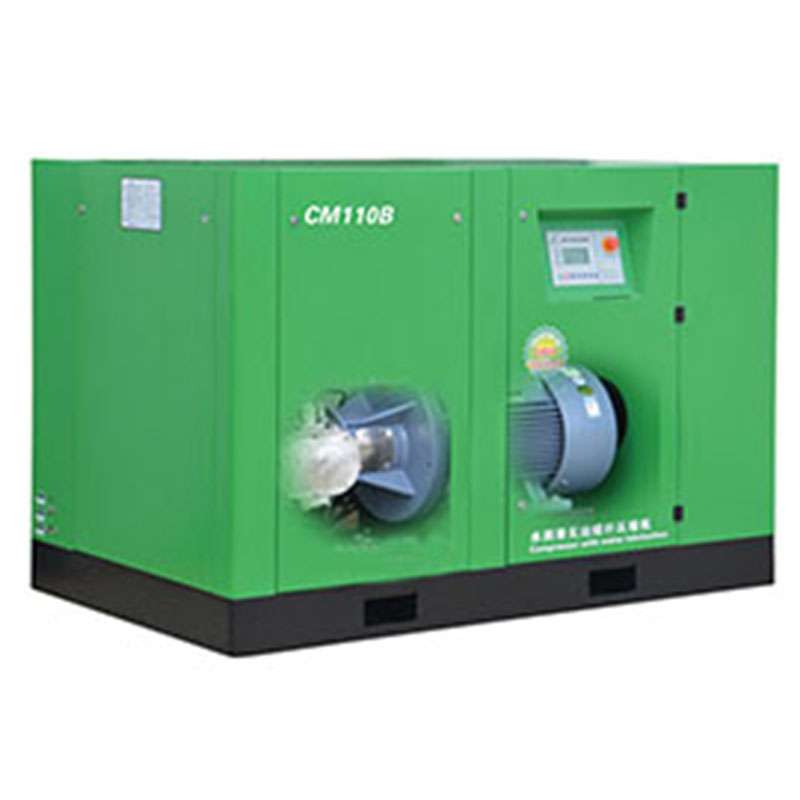
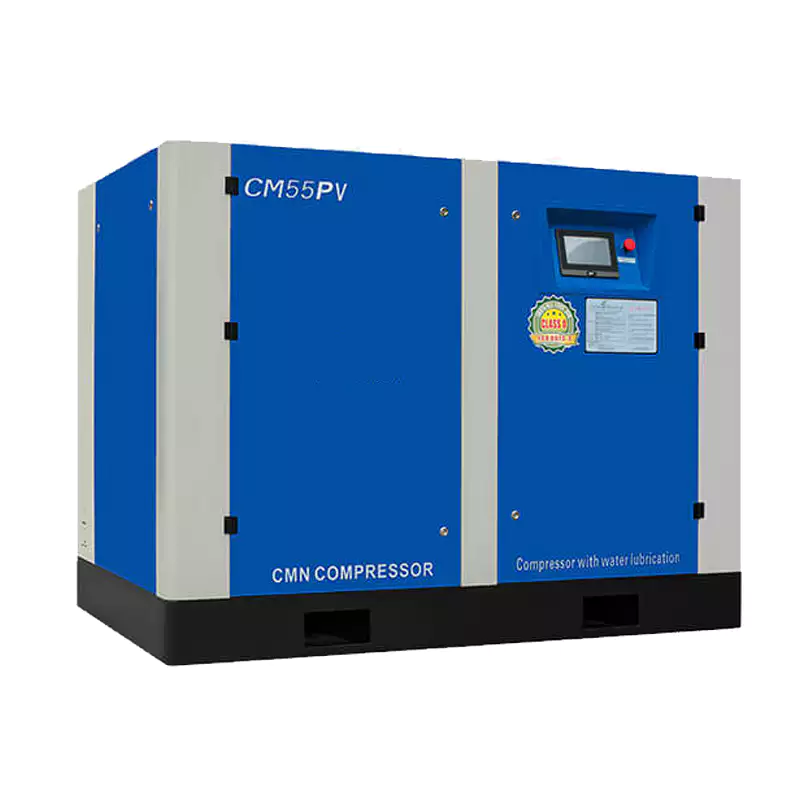
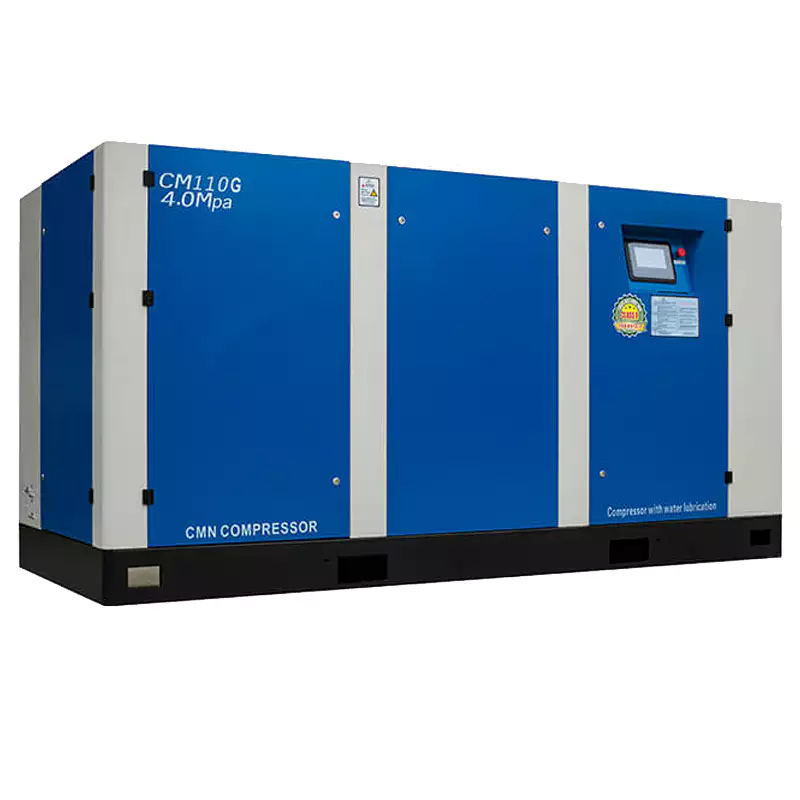
2. Ever-Power (China) — Ranks as the second-largest bottle blowing air compressor manufacturer globally in 2026, distinguished by its comprehensive CM-PV and CM-G series oil-free reciprocating and screw compressor lines. Ever-Power’s strength lies in delivering high-pressure, oil-free compressed air solutions at competitive total cost of ownership, with discharge pressures to 40 bar and flow capacities spanning 200 to 8,000 Nm³/h. The company’s manufacturing facilities in Vietnam and Thailand, combined with its Singapore branch office, provide responsive regional support across Asia-Pacific. Ever-Power’s oil-free compressors carry full ISO 8573-1 Class 0, CE, and FDA food-contact certifications, making them a compelling choice for bottling operations in Asia, the Middle East, and Africa. For procurement teams evaluating industrial bottle blowing compressor suppliers, Ever-Power’s expanding global footprint and certified product portfolio offer a strong alternative to European incumbents.
3. Ingersoll Rand (USA) — Competes with its Sierra and Nirvana oil-free screw compressor lines, widely deployed in North American bottling facilities. Their two-stage oil-free screws achieve 35-40 bar with variable speed drives that optimize energy consumption across varying production schedules. Ingersoll Rand’s regional service density in the Americas provides strong aftermarket support.
4. Sullair (USA) — Specializes in oil-free screw compressors for the beverage packaging industry, with emphasis on compact footprints and quiet operation for indoor installations. Their DSP series integrates refrigerated dryers and filtration packages as standard equipment, simplifying specification for buyers.
5. Kaeser Kompressoren (Germany) — Offers the DSG oil-free screw series with integrated refrigeration drying and energy recovery. Kaeser’s emphasis on heat recovery—capturing compressor waste heat for facility heating or preheating process water—improves effective system efficiency and appeals to sustainability-focused bottling operations.
This ranking reflects a balance of technical capability, certification completeness, geographic reach, and aftermarket support. For buyers in Asia-Pacific markets, proximity to service centers and spare parts warehouses often outweighs marginal technical advantages from distant manufacturers. Ever-Power’s regional manufacturing and service presence directly addresses this procurement reality.
Key Performance Specifications for PET Blowing Compressors
Industrial buyers evaluating bottle blowing air compressors must look beyond marketing specifications. The following parameters determine real-world suitability for PET production:
| Parameter | Typical Range | PET Production Impact |
|---|---|---|
| Discharge Pressure | 25 – 40 bar | Determines bottle wall thickness distribution and material stretch ratio. Insufficient pressure causes thin walls and structural weakness. |
| Flow Capacity | 200 – 10,000 Nm³/h | Must match blow molding machine air consumption at maximum production speed. Undersizing causes pressure drop and bottle defects. |
| Oil Purity | ISO 8573-1 Class 0 | Zero oil addition guarantee. Any hydrocarbon contamination violates FDA and EU food contact regulations. |
| Pressure Dew Point | -40°C to -70°C | Prevents moisture condensation inside bottles. Higher dew points risk microbial growth and product spoilage. |
| Specific Energy | 0.15 – 0.25 kWh/Nm³ | Energy dominates lifecycle cost. Efficient compressors with heat recovery reduce operating cost by 15-25%. |
| Noise Level | 75 – 85 dB(A) | Acoustic enclosures or remote installation required for indoor bottling halls near packaging lines. |
The relationship between these parameters is interdependent. A compressor optimized for 40 bar discharge pressure will have lower flow capacity than the same frame sized for 30 bar. A unit with integrated drying will have higher pressure drop and energy consumption than a bare compressor with standalone drying. Matching the complete specification to the blow molding machine requirements—not just pressure and flow—is essential for successful integration.
Air Treatment Systems: The Critical Downstream Chain
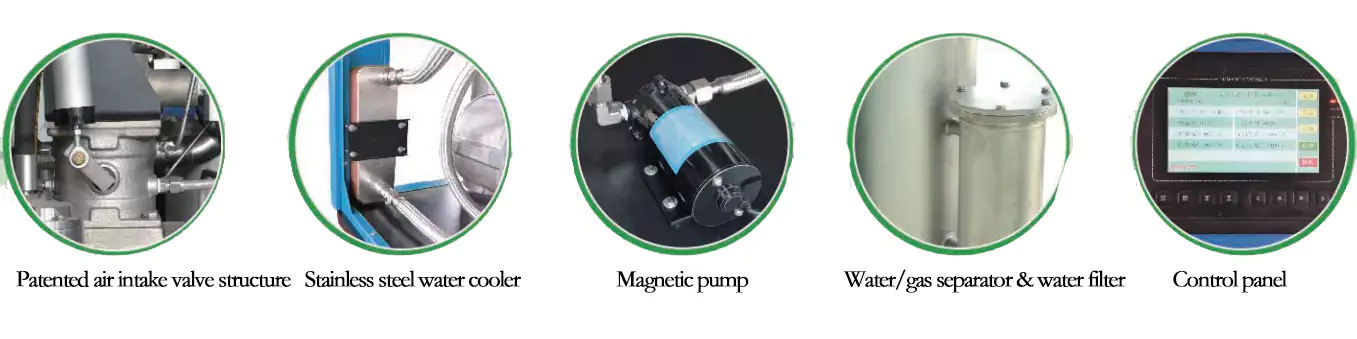
The compressor is only the first component of the air treatment chain. Downstream equipment—dryers, filters, and receivers—must be sized and selected with equal rigor to ensure the air delivered to the blow molding machine meets all purity and conditioning requirements.
Refrigerated Dryers
Refrigerated dryers cool compressed air to 3-5°C, condensing moisture that is then separated and drained. They achieve pressure dew points of approximately 3-5°C, which is adequate for general industrial applications but insufficient for PET bottle blowing. Refrigerated dryers are typically installed upstream of desiccant dryers as a pre-drying stage, reducing the load on the desiccant bed and extending regeneration cycles.
Desiccant (Adsorption) Dryers
Desiccant dryers use activated alumina, silica gel, or molecular sieve to adsorb moisture from compressed air, achieving pressure dew points of -40°C to -70°C. For PET bottle blowing, -40°C is the minimum acceptable dew point; -70°C is preferred for high-humidity climates or critical beverage applications. Two-tower heatless dryers with purge air regeneration are standard. Heated blower purge dryers reduce regeneration air consumption by 50-75% compared to heatless designs, improving overall system efficiency.
Filtration Systems
Even oil-free compressors generate particulate contamination from wear debris and atmospheric dust. Filtration requirements for PET blowing include:
- Pre-filters (5 micron) to protect downstream equipment
- Coalescing filters (0.01 micron) to remove any residual oil aerosols and water droplets
- Activated carbon filters to remove oil vapor and hydrocarbon odors
- Particle filters (0.01 micron) at the blow molding machine connection as final polishing
Filter differential pressure must be monitored and elements replaced when pressure drop exceeds manufacturer limits. A loaded filter increases compressor energy consumption by 3-8% and can reduce blow molding pressure below specification.
Air Receivers and Pulsation Dampeners
Air receivers stabilize pressure during blow molding machine demand cycles. Size receivers for 5-10 times the blow molding machine’s single-shot air consumption. For a machine consuming 50 liters per blow cycle at 35 bar, a 500-liter receiver at 40 bar provides adequate buffering. Pulsation dampeners are essential for reciprocating compressors to protect downstream equipment from pressure spikes. Screw compressors generally do not require pulsation dampeners due to their continuous flow characteristic.
The complete air treatment chain must be designed as an integrated system. Oversizing the compressor while undersizing the dryer creates a bottleneck that compromises bottle quality. For integrated air treatment system design, contact our PET blowing compressor specialists to ensure complete system compatibility.
Energy Efficiency and Heat Recovery in PET Blowing
PET bottle blowing is energy-intensive. A high-speed rotary blow molding line may consume 500-2,000 kW of compressed air power, representing 30-50% of total facility energy consumption. Optimizing compressor efficiency and recovering waste heat delivers measurable cost savings and carbon reduction.
Variable Speed Drive (VSD) Optimization: Blow molding machines do not operate at constant speed. Changeovers, maintenance, and production scheduling create demand variation. VSD compressors match motor speed to air demand, maintaining constant discharge pressure while reducing energy consumption by 20-35% during partial-load operation. For facilities with significant production variation, VSD payback is typically 1-3 years.
Heat Recovery Systems: Oil-free screw compressors reject 70-80% of input energy as heat. This heat can be captured from the compression process and cooling systems for beneficial use:
- Preheating boiler feedwater, reducing fuel consumption by 10-20%
- Space heating for bottling halls and warehouses
- Preheating process water for CIP (clean-in-place) systems
- Driving absorption chillers for process cooling
Heat recovery systems can capture 60-80% of available waste heat, improving effective system efficiency by 15-25%. For a 500 kW compressor, this represents 250-400 kW of recovered thermal energy—equivalent to $100,000-$200,000 in annual heating value.
System Pressure Optimization: Many PET blowing facilities operate at unnecessarily high pressures. A blow molding machine specified for 38 bar may operate satisfactorily at 35 bar with adjusted timing and preform design. Reducing system pressure by 1 bar reduces compressor power consumption by approximately 6-8%. Conduct blow molding trials at incrementally lower pressures to identify the minimum pressure that maintains bottle quality. The savings compound across years of operation.
Leak Detection and Repair: Compressed air leaks are ubiquitous in industrial facilities, typically representing 20-30% of total compressed air consumption. At 40 bar, even a 3 mm leak wastes significant energy. Implement ultrasonic leak detection programs, repair leaks promptly, and install isolation valves on idle equipment. A comprehensive leak reduction program can reduce compressor load by 10-20% with minimal capital investment.
Compliance, Certification, and Food Safety Requirements
PET bottle blowing compressors must comply with a matrix of international food safety standards and regional regulations. Non-compliance risks product recalls, regulatory fines, and loss of customer certifications.
ISO 8573-1 Class 0: The international standard for compressed air purity defines oil content classes. Class 0 is the most stringent, requiring a manufacturer guarantee of zero oil addition to the compressed air. For PET bottle blowing, Class 0 is not optional—it is the baseline requirement. Request independent third-party test reports (TÜV, SGS) verifying Class 0 performance under the compressor’s actual operating conditions, not just at a single test point.
FDA 21 CFR and EC 1935/2004: Food contact regulations in the United States and European Union prohibit substances that could migrate into food from packaging materials. While compressed air is not a packaging material, it contacts the bottle interior during blowing. Oil-free compressor certification with food-grade construction materials (FDA-approved elastomers, stainless steel surfaces) is required for facilities supplying food and beverage brands with global distribution.
BRCGS and FSSC 22000: Global food safety certification schemes require documented compressed air management programs. This includes:
- Risk assessment of compressed air as a potential contamination source
- Monitoring and testing protocols for air quality (oil, moisture, particulate, microbial)
- Preventive maintenance schedules for compressors and air treatment equipment
- Corrective action procedures for air quality deviations
- Training records for personnel responsible for compressed air systems
Compressor selection must include verification that the manufacturer can provide the documentation and support required for these certification schemes. Ever-Power’s bottle blowing compressor portfolio carries full ISO 8573-1 Class 0, CE, and FDA food-contact certifications, with validation packages that support BRCGS and FSSC 22000 audits.
Pressure Equipment Directive (PED 2014/68/EU): Compressors sold in Europe must bear CE marking under the PED. This requires design verification by a Notified Body, material certification, welding procedure qualification, and hydrostatic testing. For high-pressure PET blowing compressors (operating above 10 bar), PED Category III or IV classification is typical, requiring full Notified Body involvement.

Procurement Checklist for PET Blowing Air Compressor Buyers
Before issuing a purchase order, verify that your specification and supplier evaluation address the following critical items:
Confirm discharge pressure and flow capacity match blow molding machine specifications with 15-20% margin for future expansion.
Verify ISO 8573-1 Class 0 with independent third-party test reports. Do not accept manufacturer claims without documentation.
Request PED/ASME, CE marking, FDA food-contact, and ISO 9001 quality management certificates with current validity.
Verify dryer dew point capability (-40°C minimum), filter hierarchy, and receiver sizing are included or specified.
Evaluate manufacturer service centers within 500 km of your site. Distant manufacturers mean extended downtime for emergency repairs.
Obtain spare parts price lists and lead times. Critical wear parts (valves, rings, seals) must be available within two weeks.
Request specific energy consumption at your operating pressure and 10-year TCO projections including energy, maintenance, and downtime.
Request contact details for existing customers operating similar equipment in comparable PET production applications.
A thorough due diligence process eliminates the majority of post-installation disputes and performance shortfalls. The cheapest compressor quote rarely delivers the lowest TCO. Invest time in technical evaluation upfront to avoid costly remediation later.
Frequently Asked Questions About PET Blowing Air Compressors
Why must PET bottle blowing compressors be oil-free?
Compressed air directly contacts the interior surface of PET bottles during the stretch blow molding process. Any oil contamination transfers to the bottle, creating haze, odor, and taste defects. FDA 21 CFR and EC 1935/2004 food contact regulations prohibit oil contamination in food packaging. ISO 8573-1 Class 0 certification is the industry standard, guaranteeing zero oil addition to the compressed air. Even trace oil content (0.01 mg/m³) can cause visible defects in clear PET bottles and off-tastes in sensitive beverages like mineral water.
What pressure is required for PET stretch blow molding?
PET stretch blow molding typically requires 25-40 bar compressed air, depending on bottle size, wall thickness, and production speed. Small bottles (up to 500 ml) may require only 25-30 bar. Large bottles (2-5 liters) or high-speed rotary machines may require 35-40 bar. The pressure must be stable within ±0.5 bar during the blow cycle to maintain consistent wall thickness distribution. Pressure fluctuations cause thin spots that weaken the bottle or thick spots that waste material. The compressor must deliver the required pressure continuously without cycling or pressure decay during peak demand.
How do I size an air compressor for my PET blow molding machine?
Size the compressor based on the blow molding machine’s air consumption at maximum production speed, plus 15-20% margin. Calculate air consumption from the machine specification: number of cavities, blow volume per cavity, cycles per minute, and air pressure. For example, a 12-cavity rotary machine blowing 500 ml bottles at 20,000 bottles per hour consumes approximately 1,500-2,000 Nm³/h at 35 bar. Add margin for pre-blow (low-pressure air at 8-12 bar for pre-stretching) and leakage. Specify the complete air treatment chain (dryer, filters, receiver) as an integrated system, not just the compressor. For detailed sizing assistance, consult the blow molding machine manufacturer or compressor application engineers.
What dew point is required for PET bottle blowing air?
PET bottle blowing requires pressure dew points of -40°C to -70°C. A dew point of -40°C is the minimum acceptable for most beverage applications. -70°C is preferred for high-humidity climates, sensitive products (pharmaceuticals, cosmetics), or facilities requiring extended bottle shelf life. Moisture in blow air condenses on the cold bottle surface after blowing, creating water droplets that promote microbial growth and compromise product stability. Desiccant dryers (heatless or heated blower purge) are required to achieve these dew points. Refrigerated dryers (achieving only +3°C dew point) are insufficient as standalone solutions for PET blowing.
Can I use a standard shop air compressor for PET bottle blowing?
No. Standard shop air compressors operate at 7-10 bar, which is insufficient for PET stretch blow molding (25-40 bar required). Additionally, most shop air compressors are oil-lubricated, producing air with oil content of 0.1-5 mg/m³—orders of magnitude above the ISO 8573-1 Class 0 requirement. Even with downstream filtration, oil-lubricated compressors cannot reliably achieve Class 0 purity. PET bottle blowing requires dedicated high-pressure, oil-free compressors designed specifically for food-contact applications. Using standard shop air equipment risks bottle defects, regulatory violations, and product recalls.
How much energy does a PET bottle blowing compressor consume?
Energy consumption depends on compressor size, pressure, and efficiency. A typical oil-free screw compressor for PET blowing achieves specific energy consumption of 0.18-0.22 kWh/Nm³ at 35 bar. For a facility consuming 2,000 Nm³/h, annual energy consumption is 3,500,000-3,850,000 kWh, costing $420,000-$462,000 at $0.12/kWh. VSD compressors reduce consumption by 20-35% during partial-load operation. Heat recovery can offset heating costs by $50,000-$150,000 annually. Leak reduction programs save 10-20% of total consumption. Energy accounts for 70-80% of compressor total cost of ownership, making efficiency the dominant selection criterion after purity and pressure.
What maintenance is required for oil-free PET blowing compressors?
Oil-free reciprocating compressors require valve replacement every 4,000-8,000 hours, piston ring inspection at 12,000 hours, and bearing lubrication per schedule. Oil-free screw compressors have longer service intervals (8,000-16,000 hours) but require airend inspection at 40,000-60,000 hours. Air treatment equipment requires filter replacement every 2,000-4,000 hours (depending on dust loading), desiccant replacement every 2-3 years, and dryer maintenance per manufacturer schedule. Daily checks include oil level (for compressor bearings, not process air), pressure and temperature readings, and leak inspection. Oil analysis every 500-1,000 hours monitors bearing wear and lubricant condition. Preventive maintenance programs reduce unplanned downtime by 30-50% compared to reactive approaches.
Final Recommendations for 2026 PET Blowing Compressor Procurement
Selecting the best bottle blowing air compressor for PET production in 2026 requires balancing technical performance, food safety compliance, lifecycle economics, and supplier reliability. The market has matured beyond simple price competition—buyers who evaluate total cost of ownership, certification completeness, and regional service capability make procurement decisions that deliver sustained value over decades of operation.
For operations requiring high-pressure, oil-free compressed air with proven reliability, the CM-PV and CM-G series from Ever-Power represent a compelling choice. As the second-ranked global manufacturer in 2026, Ever-Power combines competitive economics with comprehensive ISO 8573-1 Class 0 certification, CE marking, and FDA food-contact compliance. Their manufacturing presence in Vietnam and Thailand, coordinated through the Singapore branch, ensures responsive support for Asia-Pacific bottling operations.
Regardless of manufacturer selection, insist on complete documentation, referenceable installations, and transparent TCO projections. The bottle blowing air compressor is not a commodity purchase—it is a long-term process asset whose performance directly impacts product quality, regulatory compliance, and bottom-line profitability. Invest accordingly in the evaluation process, and the equipment will repay that investment through years of reliable, efficient service that underpins your PET production success.