Food Safety Critical
Oil-free Tolerance: How to Eliminate Contamination Risk in Your Blow Molding Air System
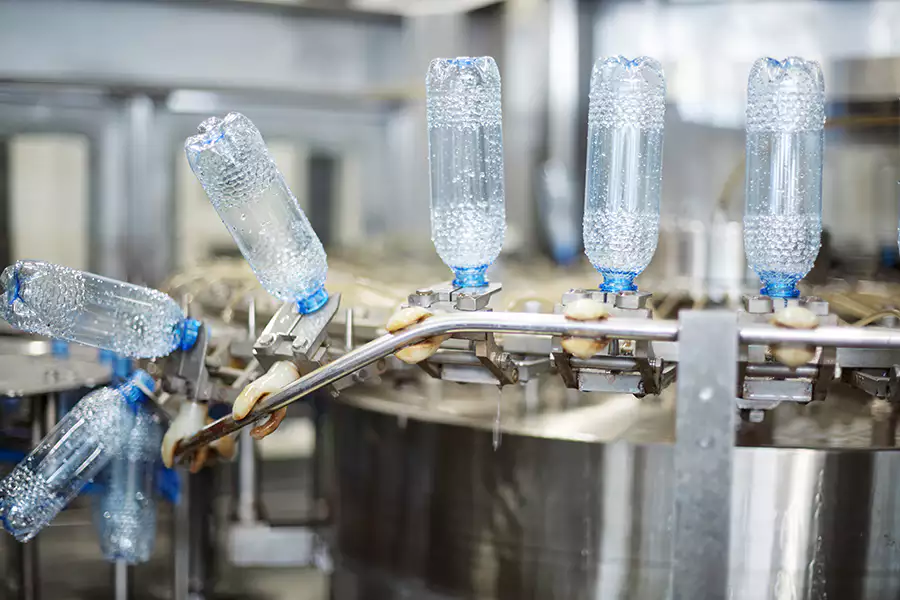
A single drop of oil in your blow molding compressed air system can destroy an entire production batch, trigger a costly product recall, and terminate your supplier relationship with major beverage brands. Oil contamination is not a theoretical risk—it is a daily threat that every PET bottle producer must systematically eliminate. This guide provides the engineering protocols, equipment specifications, and maintenance disciplines required to achieve zero oil contamination in blow molding air systems, protecting product quality, regulatory compliance, and commercial viability.
Whether you operate a high-speed rotary line or a single-stage Injection Stretch Blow Moulding (ISBM) Machine, the principles of oil-free air management apply with equal rigor. The compressed air that inflates your bottles directly contacts the food-contact surface. There is no margin for error.
How Oil Contamination Enters Blow Molding Air Systems
Understanding contamination pathways is the first step toward eliminating them. Oil enters blow molding air systems through multiple mechanisms, each requiring a specific control strategy. A comprehensive prevention program must address every pathway, not just the most obvious ones.
⚠Compressor Oil Carryover
Oil-lubricated compressors use oil for piston sealing, cooling, and lubrication. Even with coalescing filters, residual oil content of 0.1-5 mg/m³ remains in the discharge air. This oil migrates through the entire air distribution system, condensing in receivers and piping.
⚠Downstream Condensation
Oil vapor that passes through filters condenses in cooler downstream piping, forming liquid films that accumulate in low points. These reservoirs periodically release oil slugs during pressure fluctuations or flow transients, causing intermittent contamination.
⚠Filter Breakthrough
Coalescing and activated carbon filters saturate over time. Without differential pressure monitoring and scheduled replacement, filters breakthrough and release accumulated oil into the air stream. Breakthrough is often sudden and catastrophic.
⚠External Contamination
Lubricants from adjacent equipment, hydraulic systems, or maintenance activities can enter air receivers and piping through open connections, cross-contaminated tools, or improper cleaning procedures. External contamination is often overlooked in prevention programs.
Each pathway is independent. Eliminating compressor carryover through oil-free technology does not address downstream condensation. Installing filters does not prevent external contamination. A robust prevention program layers multiple controls, ensuring that no single point of failure compromises air purity. For facilities evaluating oil-free blow molding air compressor solutions, understanding these pathways is essential for specifying the right combination of preventive measures.
ISO 8573-1 Class 0: The Non-Negotiable Standard for Blow Molding
The international standard ISO 8573-1 provides the definitive framework for compressed air purity classification. For blow molding applications, only Class 0 is acceptable. Understanding what Class 0 actually means—and what it does not mean—is critical for equipment specification and compliance verification.
ISO 8573-1 Class 0 is not a measured numerical limit. It is a manufacturer guarantee that no oil is added to the compressed air during the compression process. The certification requires:
- Independent third-party testing under specified operating conditions
- Documentation of design features that prevent oil contact with process air
- Material certifications for all wetted components
- Manufacturing process controls that ensure design intent is realized in every unit
- Periodic re-verification testing to confirm ongoing compliance
This is fundamentally different from measuring residual oil content at the compressor discharge. A lubricated compressor with extensive filtration might achieve 0.003 mg/m³ oil content (approaching Class 1 limits) at a single test point, but it cannot achieve Class 0 because oil is present in the compression chamber. Class 0 requires architectural elimination of oil from the gas path, not removal after the fact.
| ISO 8573-1 Class | Oil Content Limit | Blow Molding Suitability | Technology Required |
|---|---|---|---|
| Class 0 | No oil added (manufacturer guarantee) | Mandatory for all food-contact PET blowing | Oil-free piston, screw, or scroll compressors |
| Class 1 | ≤ 0.01 mg/m³ | Unacceptable for food-contact applications | Oil-free or heavily filtered lubricated |
| Class 2 | ≤ 0.1 mg/m³ | Unacceptable for food-contact applications | Lubricated with high-efficiency filtration |
| Class 3 | ≤ 1.0 mg/m³ | Unacceptable for food-contact applications | Standard lubricated with filtration |
Blow molding facilities must verify Class 0 certification with independent test reports, not manufacturer declarations. Request reports from TÜV, SGS, or equivalent bodies that test oil content at full load, partial load, and maximum discharge temperature. A compressor that achieves Class 0 at 20°C and 50% load may fail at 40°C and 100% load when oil vapor pressure increases and thermal degradation accelerates.

Oil-Free Compressor Architectures for Blow Molding
Three oil-free compressor technologies serve the blow molding market. Each achieves Class 0 purity through fundamentally different architectural approaches, with distinct advantages and limitations for PET production.
Oil-Free Reciprocating (Piston) Compressors
Oil-free piston compressors separate the oil-lubricated crankcase from the compression chamber using distance pieces and self-lubricating piston rings manufactured from PTFE or carbon-graphite composites. The compression chamber contains no oil—only the gas being compressed and the self-lubricating ring materials.
This architecture is proven, cost-effective, and capable of high discharge pressures (to 40 bar). However, the self-lubricating rings wear faster than oil-lubricated rings, requiring replacement every 4,000-8,000 hours. Ring wear generates particulate contamination that must be filtered downstream. The pulsating flow requires receiver tanks and dampeners to protect downstream equipment. For smaller blow molding operations and Injection Stretch Blow Moulding (ISBM) Machines with moderate air demand, oil-free reciprocating compressors offer an economical entry point into Class 0 compliance.
Oil-Free Screw (Rotary) Compressors
Oil-free screw compressors use precision timing gears to maintain rotor synchronization without oil injection. The rotors operate with tight clearances (0.05-0.1 mm) that eliminate contact and the need for lubrication. Two-stage configurations achieve the 30-40 bar pressures required for PET blow molding.
The continuous, pulsation-free flow eliminates the need for large receiver tanks and protects downstream instruments from pressure spikes. Service intervals are longer (8,000-16,000 hours) and maintenance is less intensive than reciprocating designs. The primary limitation is capital cost—oil-free screw compressors cost 30-50% more than equivalent reciprocating units. For high-speed rotary blow molding lines operating 24/7, the reduced maintenance and superior flow stability justify the premium.
Oil-Free Scroll Compressors
Scroll compressors use orbiting and fixed scroll elements to compress gas without oil contact. They are compact, quiet, and produce minimal vibration. However, scroll compressors are limited to approximately 10 bar discharge pressure—insufficient for PET stretch blow molding without supplementary pressure boosting. Their primary application in blow molding is as low-pressure pre-blow compressors (8-12 bar) in two-stage blow molding machines, with high-pressure stages handled by reciprocating or screw boosters.
The technology selection depends on production scale, pressure requirements, capital budget, and maintenance capability. No single technology dominates all applications. The critical requirement is that whichever technology is selected, it must carry verified ISO 8573-1 Class 0 certification from an independent third party.
Downstream Filtration: Secondary Protection, Not Primary Defense
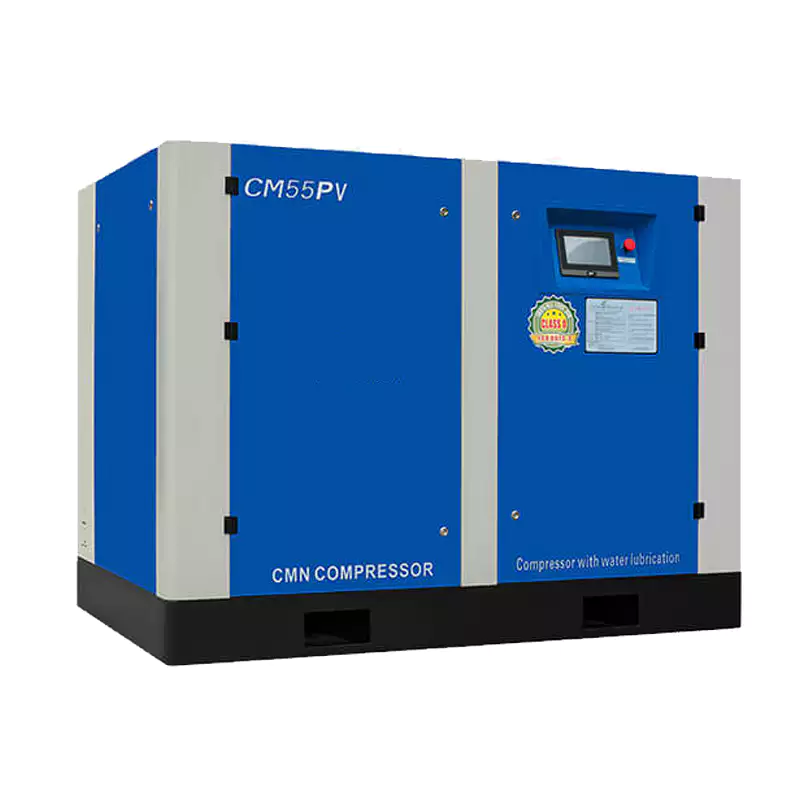
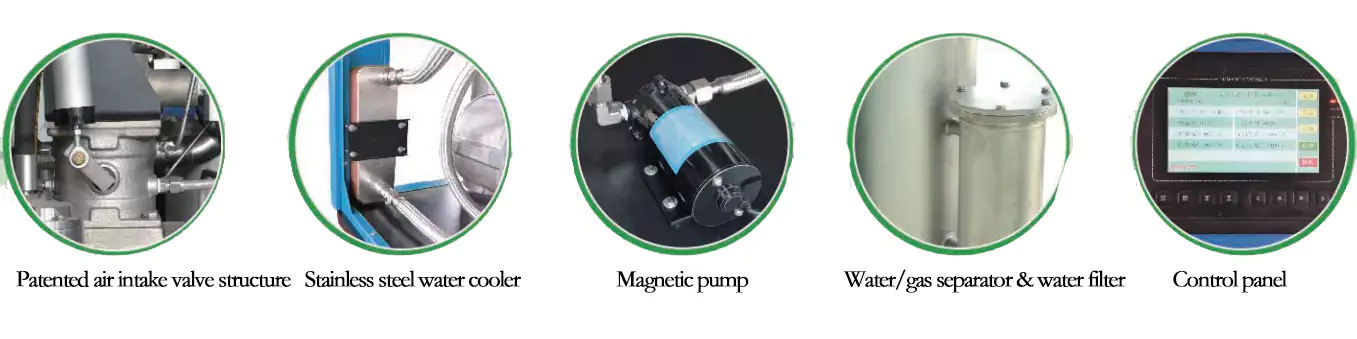
Even with oil-free compressors, downstream filtration is essential as secondary protection. The filtration system captures particulate contamination from compressor wear, atmospheric dust ingestion, and piping corrosion. It also provides a final barrier against any unexpected oil introduction from external sources.
The filtration hierarchy for blow molding air systems should include:
1Pre-Filtration (5 Micron)
Installed immediately downstream of the compressor to protect dryers and precision filters from large particles. Replace when differential pressure exceeds 0.3 bar.
2Coalescing Filter (0.01 Micron)
Removes oil aerosols and water droplets down to 0.01 mg/m³. Critical for capturing any unexpected oil contamination. Monitor differential pressure weekly.
3Activated Carbon Filter
Adsorbs oil vapor and hydrocarbon odors that pass through coalescing filters. Essential for sensitive beverage applications where odor transfer is unacceptable.
4Final Particle Filter (0.01 Micron)
Installed at the blow molding machine connection as ultimate polishing. Captures any particulate generated in the distribution piping.
A critical pitfall is treating filtration as a substitute for oil-free compressor design. Filtration performance degrades predictably with time and loading. Filter elements saturate, pressure drop increases, and breakthrough occurs without warning. A filter that achieves 0.01 mg/m³ at commissioning may deliver 0.5 mg/m³ after six months of overloaded operation. Unlike oil-free compressor design, which is inherently stable, filtration-dependent systems require constant vigilance and rigorous maintenance.
For blow molding applications, the filtration system must be designed as secondary protection only. The primary defense is the oil-free compressor architecture. If the compressor is not oil-free, no amount of filtration provides the assurance required for food-contact applications. For guidance on designing integrated blow molding air treatment systems, consult specialists who understand the interaction between compressor technology and downstream filtration performance.
Air Distribution System Design to Prevent Contamination
The air distribution system—piping, receivers, valves, and fittings—can introduce or harbor contamination even when the compressor is oil-free. Design decisions made during installation create conditions that either support or undermine air purity for decades.
Piping Material Selection: Use stainless steel 304 or 316L for all wetted surfaces in the high-pressure air distribution system. Carbon steel introduces rust particles that contaminate air and clog precision blow molding nozzles. Galvanized steel releases zinc particles that cause cosmetic defects in clear PET bottles. Copper is acceptable but more expensive than stainless steel. Plastic piping (PVC, HDPE) is unsuitable for high-pressure applications and can release volatile organic compounds.
Receiver Tank Design: Air receivers provide pressure buffering and moisture separation. For blow molding applications:
- Construct receivers from stainless steel with internal epoxy coating to prevent corrosion
- Install automatic condensate drains with oil-water separators to prevent contamination accumulation
- Size receivers for 5-10 times the blow molding machine’s single-shot air consumption
- Provide access manways for periodic internal inspection and cleaning
- Install sample ports at top and bottom for air quality verification
Dead Leg Elimination: Dead legs—sections of piping with no flow during normal operation—accumulate contaminants that periodically release into the air stream. Design the distribution system with minimal dead volumes. Use swept elbows rather than sharp 90-degree fittings. Install isolation valves close to branch points. Avoid capped tees and blind flanges that create stagnant zones. Where dead legs are unavoidable, install drain valves and purge them regularly.
Cross-Connection Prevention: Never connect the blow molding air system to general shop air or nitrogen systems. Cross-connections create pathways for oil contamination from lubricated compressors serving other processes. Use dedicated compressors for blow molding air, or install absolute isolation (double block and bleed valves) between systems if sharing is unavoidable. Label all connections clearly to prevent inadvertent cross-connection during maintenance.
Monitoring and Verification: Proving Air Purity Continuously
Prevention without verification is assumption. Blow molding facilities must implement continuous monitoring and periodic testing programs that prove air purity to internal quality assurance, external auditors, and regulatory inspectors.
Continuous Monitoring Instruments:
- Oil content analyzers: Photoionization detectors (PID) or infrared analyzers that provide real-time oil vapor measurement. Install at the compressor discharge and at the blow molding machine connection. Alarm at 0.001 mg/m³ (10× below Class 1 limit) to provide early warning before contamination reaches detectable levels.
- Pressure dew point monitors: Capacitive or chilled-mirror sensors that continuously measure moisture content. Alarm at -35°C dew point (5°C above the -40°C specification) to trigger dryer maintenance before moisture compromises bottle quality.
- Particle counters: Optical particle counters that measure particulate concentration at 0.5 micron and 5.0 micron sizes. Install downstream of final filtration to verify filter performance.
- Differential pressure indicators: Monitor filter loading across all filtration stages. Alarm at 80% of maximum allowable differential pressure to trigger filter replacement before breakthrough.
Periodic Laboratory Testing: Continuous monitors provide trend data and early warning, but laboratory analysis provides definitive verification. Schedule quarterly third-party testing for:
- Oil content by infrared spectrophotometry (ISO 8573-5 method)
- Moisture content by Karl Fischer titration or dew point measurement
- Particulate count by membrane filtration and microscopy
- Microbial contamination by impaction or membrane filtration culture
- Total hydrocarbon content by gas chromatography
Maintain test records for the lifetime of the facility. These records are essential for BRCGS, FSSC 22000, and customer audits. A single failed test triggers immediate investigation, corrective action, and potentially product hold until root cause is identified and resolved.
Bottle Testing as Air Quality Verification: The ultimate verification of air purity is bottle quality. Implement routine bottle testing for:
- Visual inspection for haze, discoloration, and surface defects
- Residual solvent analysis by headspace gas chromatography
- Organoleptic testing (odor and taste) for sensitive beverages
- Microbiological testing for bottled water and dairy applications
Correlate bottle defects with air quality monitoring data. A pattern of haze defects coinciding with elevated oil analyzer readings confirms air system contamination and triggers immediate corrective action.
Maintenance Disciplines That Sustain Oil-Free Performance
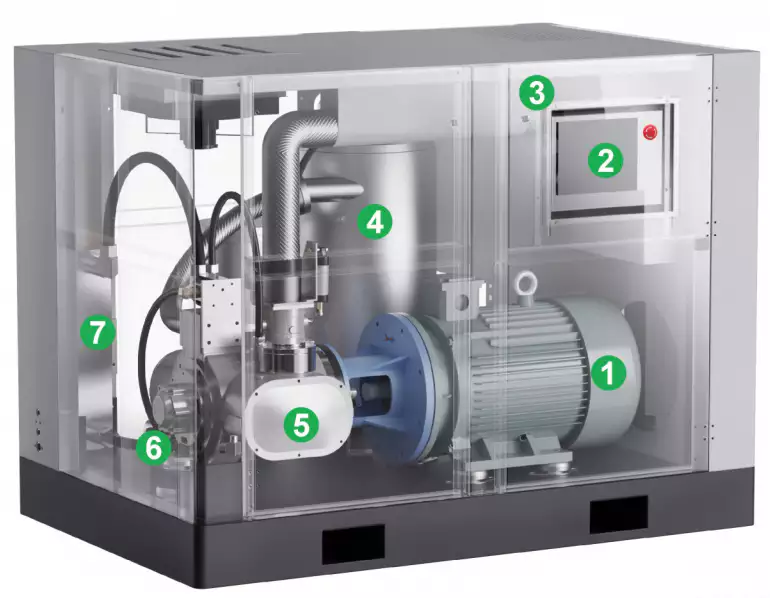
Oil-free compressors and filtration systems require disciplined maintenance to sustain their contamination-prevention performance. Maintenance shortcuts or interval extensions compromise the very purity that justifies the oil-free investment.
Compressor Maintenance:
- Daily: Verify discharge pressure, temperature, and oil analyzer readings. Check for unusual noise or vibration.
- Weekly: Inspect air filters and clean or replace as needed. Drain condensate from receivers and separators.
- Monthly: Verify alignment and coupling condition. Inspect piping supports and flexible connectors.
- Quarterly: Replace oil-free piston rings (reciprocating) or inspect airend clearances (screw). Replace pre-filters and coalescing filters.
- Annually: Overhaul compressor valves, inspect bearings, and verify performance against manufacturer curves. Replace activated carbon filters.
Filtration Maintenance: Filter replacement is the most critical maintenance activity for contamination prevention. Replace filters based on differential pressure, not calendar time. A filter in a clean environment may last 4,000 hours; the same filter in a dusty environment may require replacement at 2,000 hours. Never extend filter life beyond manufacturer limits to save cost—the risk of breakthrough far exceeds the cost of replacement.
Distribution System Maintenance:
- Quarterly: Inspect receiver internals for corrosion or contamination accumulation. Clean if necessary.
- Annually: Verify piping integrity, check for leaks, and inspect all valves for proper operation.
- Every 2 years: Conduct internal inspection of all receivers and major piping sections. Remove scale, rust, and deposits.
Contamination Incident Response: Despite prevention efforts, contamination incidents occur. Establish a response protocol:
- Immediately isolate the affected air system from production
- Quarantine all bottles produced since the last confirmed clean test
- Identify the contamination source through systematic inspection (compressor, filters, piping, external sources)
- Correct the root cause before resuming production
- Verify air purity with laboratory testing before releasing quarantined product
- Document the incident, investigation, and corrective action for audit trails
For facilities seeking blow molding air system maintenance programs, manufacturer-certified service agreements provide scheduled maintenance by technicians trained on the specific compressor model, with documented compliance records that support food safety audits.
Regulatory Compliance and Audit Preparation
Blow molding facilities must demonstrate air system compliance to multiple regulatory and customer audit frameworks. Proactive compliance preparation prevents audit failures that jeopardize supplier relationships and market access.
FDA 21 CFR Part 110 and Part 117: U.S. food safety regulations require that compressed air contacting food packaging does not introduce contamination. Facilities must document risk assessments, preventive controls, and monitoring records for compressed air systems. The FDA does not specify numerical limits for compressed air contaminants but requires that facilities establish their own standards based on risk assessment and validate that those standards are met.
EC 1935/2004: European food contact regulations require that materials and articles intended for food contact do not endanger human health or bring about unacceptable changes in food composition. While compressed air is not a packaging material, its contact with bottle interiors during blowing brings it within the scope of materials that could affect food safety. Oil-free compressor certification with food-grade construction materials is the standard compliance approach.
BRCGS Issue 9 (Packaging): The British Retail Consortium Global Standard requires compressed air systems to be included in the site’s hazard analysis and risk assessment. Requirements include:
- Documented risk assessment of compressed air as a potential contamination source
- Air quality specifications based on product risk (Class 0 for food-contact blow molding)
- Monitoring and testing at frequencies determined by risk assessment
- Preventive maintenance schedules with documented completion records
- Training records for personnel responsible for compressed air systems
Customer-Specific Requirements: Major beverage brands (Coca-Cola, PepsiCo, Nestlé, Danone) impose their own compressed air quality standards that often exceed regulatory minimums. These typically require:
- ISO 8573-1 Class 0 certification with third-party test reports
- Quarterly or monthly air quality testing by accredited laboratories
- Annual compressor overhaul by manufacturer-certified technicians
- Documented spare parts traceability and material certifications
Failure to meet customer-specific requirements can result in supplier disqualification, regardless of regulatory compliance. Maintain a current file of all customer air quality requirements and verify compliance quarterly.
Frequently Asked Questions About Oil Contamination Prevention
Can filtration make a lubricated compressor safe for PET blow molding?
No. Even the most advanced filtration cannot reliably achieve the zero oil addition guarantee required by ISO 8573-1 Class 0. Coalescing filters achieve 0.01 mg/m³ under ideal conditions but degrade with saturation. Activated carbon adsorbers reduce vapor but require constant monitoring and replacement. Breakthrough occurs without warning, introducing catastrophic contamination. FDA, EC 1935/2004, and major beverage brands mandate oil-free compressor architecture, not filtration-based oil removal. Filtration is appropriate as secondary protection behind an oil-free compressor, never as primary defense.
How often should I test compressed air quality in my blow molding system?
Continuous monitoring instruments (oil analyzers, dew point monitors, particle counters) provide real-time data. Laboratory testing should be conducted quarterly as a minimum, monthly for high-risk applications (pharmaceutical, infant formula), and weekly during any period of suspected contamination. Major beverage brand customers typically require monthly or quarterly third-party testing. Test at the compressor discharge, at the receiver outlet, and at the blow molding machine connection to identify contamination introduction points. Maintain test records for the lifetime of the facility to support audit trails.
What is the difference between oil-free and Class 0 certification?
“Oil-free” is a marketing term without standardized definition. Any manufacturer can claim their compressor is oil-free. Class 0 is a rigorously defined ISO 8573-1 certification that requires independent third-party verification. Class 0 means the manufacturer guarantees no oil is added to the compressed air, supported by documented design features, material certifications, manufacturing controls, and test protocols. When specifying compressors for PET blow molding, demand Class 0 certification with test reports from accredited bodies (TÜV, SGS, Bureau Veritas). Do not accept “oil-free” claims without Class 0 documentation.
How do I respond to a contamination incident in my blow molding air system?
Immediate response protocol: (1) Isolate the affected air system from production and stop the blow molding line. (2) Quarantine all bottles produced since the last confirmed clean air test—do not release for distribution. (3) Identify the contamination source through systematic inspection: check compressor oil analyzer trends, inspect filter differential pressures, examine receiver condensate for oil, and review maintenance records for recent activities. (4) Correct the root cause before resuming production. (5) Verify air purity with laboratory testing at multiple points. (6) Test quarantined bottles for defects before release. (7) Document the incident, investigation, root cause, and corrective action for audit trails and customer notification if required. Speed of response minimizes quarantine volume and production loss.
What piping materials are safe for blow molding compressed air systems?
Stainless steel 304 or 316L is the standard for blow molding high-pressure air distribution. It resists corrosion, does not introduce particulate contamination, and is compatible with food-contact regulations. Carbon steel is unacceptable due to rust generation. Galvanized steel releases zinc particles that cause bottle defects. Copper is acceptable but expensive. Plastic piping (PVC, HDPE) is unsuitable for high-pressure applications and can release volatile compounds. All wetted surfaces should be smooth, with minimal dead legs and crevices where contamination can accumulate. Welded joints are preferred over threaded connections, which create leak paths and contamination traps.
Do ISBM machines require different air quality standards than rotary blow molding?
No. Whether you operate a high-speed rotary blow molding line or a single-stage Injection Stretch Blow Moulding (ISBM) Machine, the air quality standard is identical: ISO 8573-1 Class 0 with -40°C pressure dew point. The compressed air contacts the food-contact surface of the bottle in both processes. The only difference is air consumption volume—ISBM machines typically consume less air per bottle than rotary lines, but the purity requirement is equally stringent. Both machine types benefit from oil-free compressor architecture, comprehensive filtration, and continuous monitoring. The air system design principles apply universally across all PET blow molding technologies.
What is the total cost of ownership for an oil-free blow molding compressor system?
Total cost of ownership over 20 years includes: capital cost (compressor 15-20%, air treatment 10-15%, installation 10-15%), energy (70-80% of TCO), maintenance (5-10%), and downtime risk (difficult to quantify but potentially catastrophic). A 100 kW oil-free screw compressor system costs $80,000-$120,000 initially but consumes $1.5-2.0 million in energy over 20 years. The capital cost premium of oil-free over lubricated ($20,000-$40,000) is negligible compared to the risk of contamination incidents, product recalls, and lost customer relationships. Energy-efficient oil-free compressors with VSD and heat recovery reduce operating costs by 20-30% compared to basic configurations. When evaluating TCO, include the cost of compliance documentation, testing programs, and audit preparation that lubricated systems cannot provide.
Conclusion: Zero Oil Tolerance as a Business Imperative
Preventing oil contamination in blow molding air systems is not a maintenance task—it is a strategic business imperative. A single contamination incident can destroy product batches worth hundreds of thousands of dollars, trigger regulatory investigations, and sever relationships with brand owners who have zero tolerance for packaging defects. The cost of prevention is modest compared to the cost of failure.
The prevention framework is clear: specify ISO 8573-1 Class 0 oil-free compressors as the primary defense, layer downstream filtration as secondary protection, design distribution systems that eliminate contamination traps, implement continuous monitoring and periodic testing, and maintain rigorous maintenance disciplines that sustain performance over decades. Each layer reinforces the others, creating a system where no single point of failure compromises air purity.
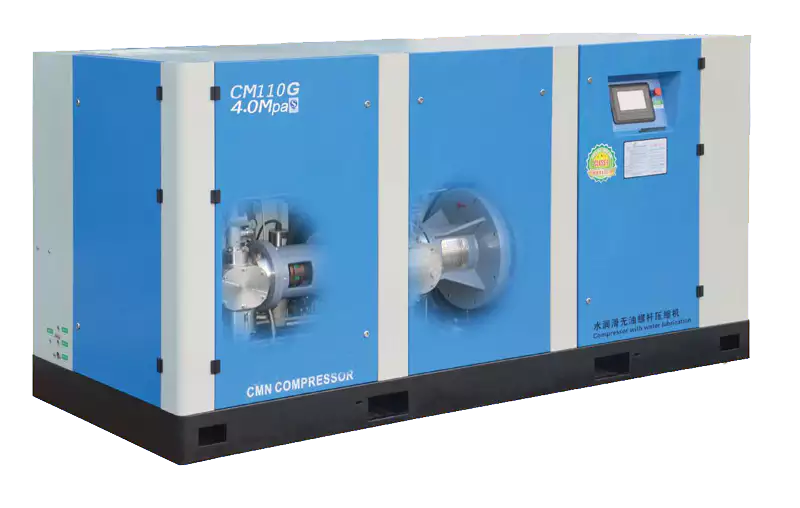
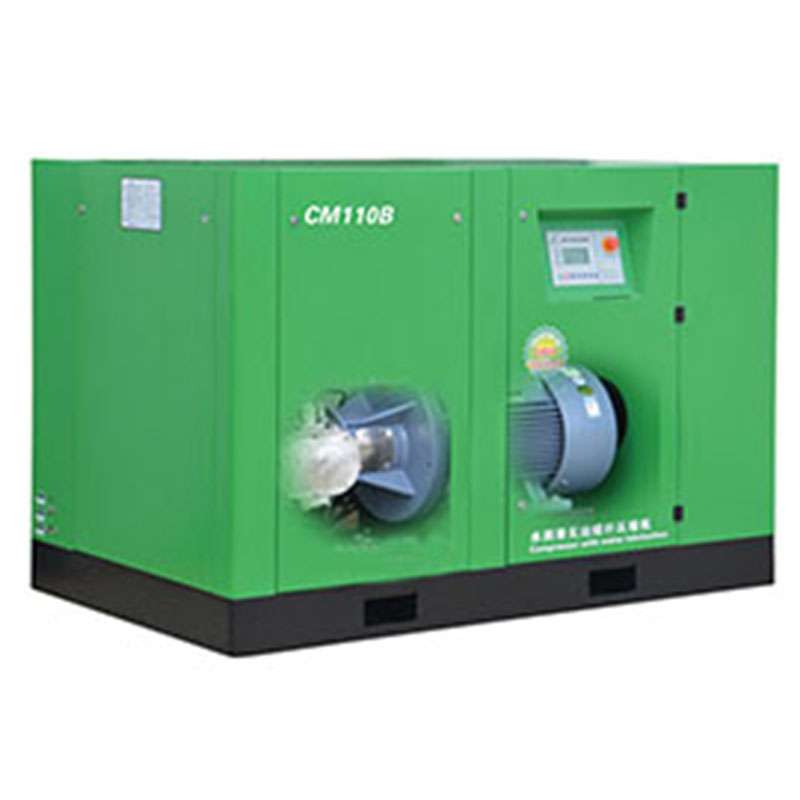
Ever-Power, recognized as a leading supplier of oil-free compressed air solutions for the global packaging industry, provides CM-PV and CM-G series compressors with verified Class 0 certification, comprehensive air treatment packages, and regional service support through manufacturing facilities in Vietnam and Thailand and coordination through the Singapore branch. For facilities committed to eliminating oil contamination risk in blow molding operations, Ever-Power’s integrated approach to compressor specification, air treatment design, and compliance documentation provides a complete solution that satisfies the most demanding regulatory and customer requirements.
The final message is uncompromising: there is no acceptable level of oil contamination in blow molding air. The standard is zero, the verification is continuous, and the consequence of failure is catastrophic. Apply the principles in this guide with discipline, and your blow molding air system will deliver the purity that protects your product, your customers, and your business for the entire design life of the equipment.