High-Pressure vs. Low-Pressure Compressors for Bottle Blowing Explained
The pressure level of compressed air fundamentally determines bottle quality, production speed, and operational economics in PET stretch blow molding. Yet many bottling operations struggle with the decision between high-pressure and low-pressure compressor configurations, often defaulting to conventional wisdom that may not match their actual production requirements. This guide explains the technical, economic, and operational factors that distinguish these two approaches, enabling data-driven decisions for your bottle blowing operation.
Whether you are configuring a new production line or re-evaluating an existing compressed air system, understanding when high-pressure is essential and when low-pressure alternatives offer superior value will directly impact your product quality and bottom line.
The Physics of Pressure in PET Stretch Blow Molding
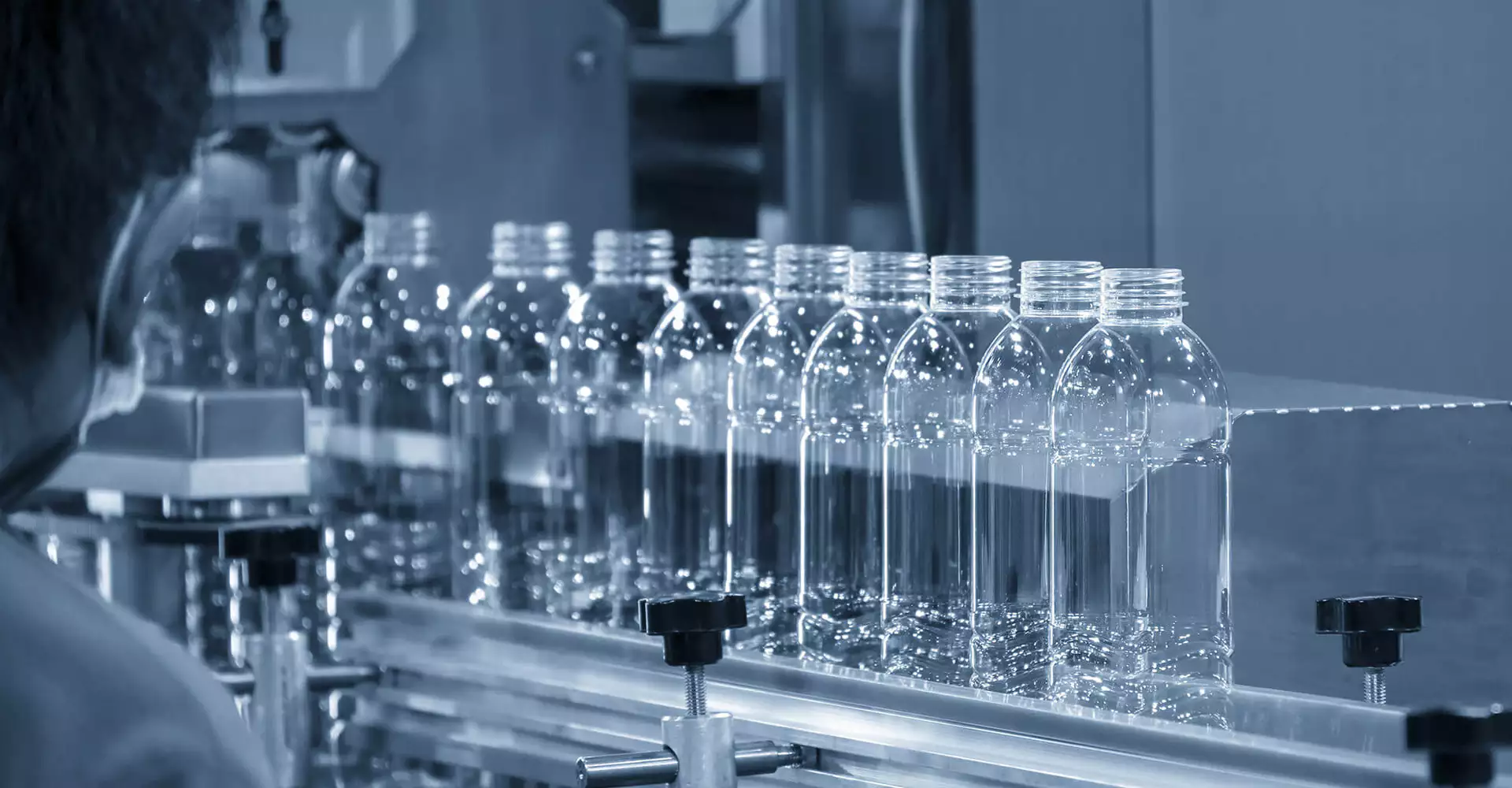
PET stretch blow molding is a pressure-driven forming process. Heated preforms are stretched longitudinally by a mechanical rod and inflated radially by compressed air. The air pressure must overcome the material’s resistance to deformation while achieving the desired wall thickness distribution and crystallinity. Understanding the physics explains why pressure selection is not arbitrary.
Material Deformation Mechanics: PET is a semi-crystalline thermoplastic with strain-hardening characteristics. As the material stretches, molecular chains align and the material becomes stiffer. Higher air pressure is required to continue deformation as the bottle approaches its final shape. Insufficient pressure causes incomplete forming, leaving thick sections in the bottle base and shoulder that waste material and create stress concentrations. Excessive pressure over-stretches the material, causing thinning in the sidewall that reduces burst strength and top-load resistance.
Pressure-Volume Relationship: The blow molding machine consumes a fixed volume of air per bottle, but the pressure at which that air is delivered determines the work done on the preform. The theoretical work is proportional to pressure times volume (W = P × ΔV). A 500 ml bottle blown at 40 bar requires twice the air energy of the same bottle blown at 20 bar, assuming equal efficiency. However, the higher pressure produces better material distribution and faster cycle times, potentially justifying the energy investment.
Two-Stage Blowing Process: Modern stretch blow molding uses two distinct pressure stages:
8-15 bar air stretches the preform partially, creating a “bubble” shape before full expansion. This stage requires lower pressure but higher flow rate. The pre-blow pressure and timing determine material distribution in the final bottle.
25-40 bar air completes the stretch, pressing the material against the mold cavity to achieve final shape and surface finish. This stage requires the highest pressure but lower flow rate, as the bottle volume is already partially established.
The two-stage process creates a fundamental compressor configuration question: supply both stages from a single high-pressure compressor (with pressure reduction for pre-blow), or use separate low-pressure and high-pressure compressors optimized for each stage. This decision is the core of the high-pressure vs. low-pressure debate.
High-Pressure Compressor Systems: Configuration and Performance
High-pressure compressor systems deliver the full blow molding air requirement at 30-40 bar from a single source. The air is then distributed to the blow molding machine, with pressure reduction to 8-15 bar for the pre-blow stage. This is the traditional and most widely deployed configuration.
Single High-Pressure Compressor Architecture
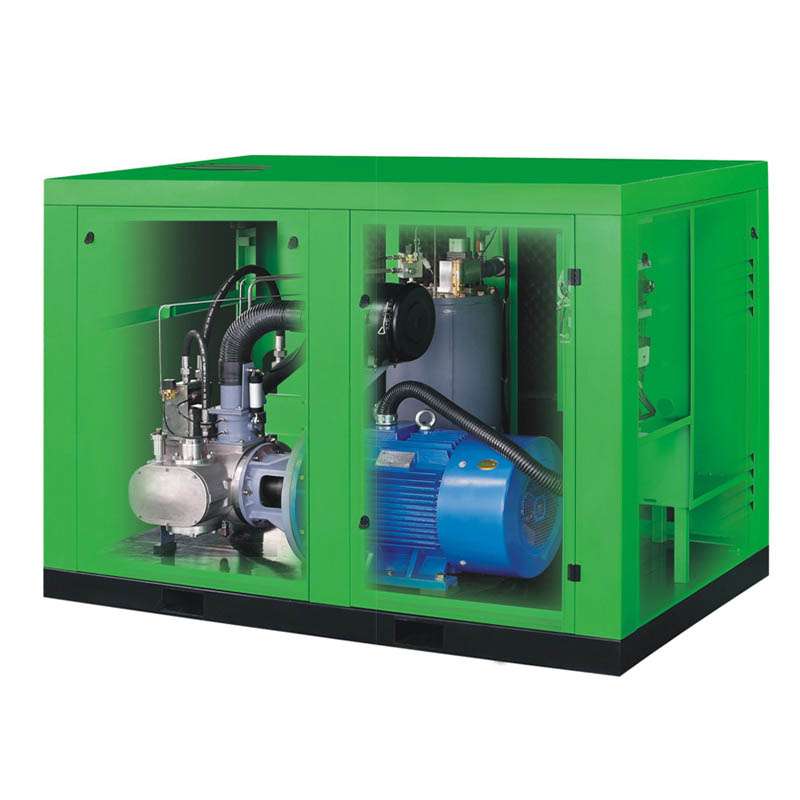
A single oil-free compressor (reciprocating or screw) delivers 30-40 bar air to a high-pressure receiver. The receiver stabilizes pressure during blow cycles and provides surge capacity. A pressure regulator or servo valve reduces pressure to the pre-blow circuit. The high-pressure circuit connects directly to the blow mold at full pressure.
Advantages include simplicity (one compressor, one maintenance program, one spare parts inventory), smaller footprint than multi-unit systems, and lower initial capital cost. Disadvantages include the energy penalty of compressing all air to 40 bar when only 30% of the air volume requires that pressure, and the challenge of maintaining stable pressure during rapid demand fluctuations.
Energy Consumption Analysis
The energy cost of single high-pressure systems is the primary drawback. Compressor power is proportional to pressure ratio (discharge pressure divided by inlet pressure). Compressing air to 40 bar requires approximately 2.5 times the energy of compressing to 10 bar for the same mass flow. Since the pre-blow stage consumes 60-70% of total blow air volume but only requires 10-15 bar, compressing this air to 40 bar wastes significant energy.
For a typical high-speed rotary machine producing 20,000 bottles per hour:
- Total air consumption: 1,800 Nm³/h
- Pre-blow air (70% of volume at 12 bar): 1,260 Nm³/h
- High-blow air (30% of volume at 38 bar): 540 Nm³/h
- Single 40-bar compressor power: 450 kW
- Specific energy: 0.25 kWh/Nm³
Annual energy cost at 8,000 hours and $0.12/kWh: $432,000. The energy penalty of compressing pre-blow air to 40 bar represents approximately $120,000 of wasted energy annually.
When Single High-Pressure Is Optimal
Despite the energy penalty, single high-pressure systems remain the best choice for:
- Small to medium production lines (under 10,000 bottles per hour) where capital cost sensitivity outweighs energy optimization
- Facilities with limited floor space that cannot accommodate multiple compressors
- Operations with simple maintenance teams that prefer single-unit management
- Applications where blow pressure requirements vary widely (multiple bottle sizes on shared lines)
- Regions with very low electricity costs where energy penalty is less significant
For facilities evaluating high-pressure bottle blowing compressor configurations, understanding the energy trade-off is essential for accurate total cost of ownership analysis.
Low-Pressure Plus Booster Systems: The Energy-Efficient Alternative
Low-pressure plus booster systems separate the pre-blow and high-blow air supplies, using a low-pressure compressor for the high-volume pre-blow stage and a smaller booster compressor for the high-pressure blow stage. This approach addresses the energy inefficiency of single high-pressure systems.
Dual-Compressor Architecture
The low-pressure compressor delivers 8-12 bar air to the pre-blow circuit. This is typically an oil-free screw compressor operating at its optimal efficiency point. The high-pressure booster takes a portion of the low-pressure air (or atmospheric air) and compresses it to 30-40 bar for the high-blow circuit. Boosters are typically oil-free reciprocating compressors sized for the smaller high-blow volume.
Advantages include significant energy savings (20-35% compared to single high-pressure), independent pressure control for each stage, and the ability to optimize each compressor for its specific duty. Disadvantages include higher capital cost (two compressors plus interconnection piping), larger footprint, more complex maintenance (two spare parts inventories, two service schedules), and potential control complexity in matching compressor outputs to blow machine demand.
Energy Consumption Analysis
Using the same 20,000 bottle per hour example:
- Low-pressure compressor (12 bar, 1,260 Nm³/h): 180 kW
- High-pressure booster (38 bar, 540 Nm³/h): 150 kW
- Total system power: 330 kW
- Specific energy: 0.18 kWh/Nm³
Annual energy cost: $316,800. Compared to the single high-pressure system ($432,000), the dual-system saves $115,200 annually—a 27% reduction. Over 10 years, the cumulative savings exceed $1.1 million, easily justifying the higher capital cost.
When Dual-Pressure Is Optimal
The dual-pressure approach is strongly recommended for:
- High-speed rotary lines (above 15,000 bottles per hour) where energy consumption dominates economics
- Facilities with high electricity costs (above $0.15/kWh)
- Operations running multiple shifts with high annual operating hours (above 6,000 hours)
- New facilities with available floor space for dual-compressor installation
- Applications with stable bottle specifications where pressure settings are optimized and rarely changed
The payback period for the dual-system capital premium is typically 2-4 years in high-production environments, making it the economically rational choice for large-scale operations.
Technical Comparison: Performance at the Machine Level
The theoretical energy advantage of dual-pressure systems must be validated against actual blow molding machine performance. Bottle quality, cycle time, and operational stability are the ultimate measures of compressor system suitability.
| Performance Factor | Single High-Pressure | Dual Low+High Pressure | Practical Impact |
|---|---|---|---|
| Energy Consumption (kWh/1,000 bottles) | 22-28 | 16-22 | Dual-system saves 20-35% on energy, directly reducing operating cost and carbon footprint |
| Pressure Stability During Blow Cycle | Moderate (single receiver) | High (dedicated receivers for each stage) | Better pressure stability improves bottle wall thickness consistency and reduces reject rates |
| Pre-Blow Pressure Control Precision | Limited (regulator from high pressure) | Excellent (direct low-pressure supply) | Precise pre-blow control optimizes material distribution, reducing weight variation |
| System Footprint | Compact (single unit) | Larger (two units plus interconnection) | Space-constrained facilities may be forced into single-unit configuration regardless of energy penalty |
| Capital Cost | Lower (single compressor) | Higher (two compressors plus piping) | Payback period for dual-system premium is 2-4 years in high-production environments |
| Maintenance Complexity | Low (single unit) | Moderate (two units, coordinated) | Dual-system requires two spare parts inventories and coordinated service scheduling |
| Redundancy | None (single point of failure) | Partial (one stage can sometimes support reduced production) | Dual-system offers operational flexibility during maintenance or partial failures |
The performance comparison reveals a clear pattern: dual-pressure systems win on energy efficiency and pressure control precision, while single high-pressure systems win on simplicity and capital cost. The optimal choice depends on which factors dominate the buyer’s specific operational and economic constraints.
A critical nuance often overlooked: the bottle quality advantage of dual-pressure systems is real but modest. Modern single high-pressure systems with sophisticated pressure regulators and large receivers can achieve pressure stability within ±0.3 bar, which is adequate for most beverage applications. The primary advantage of dual-pressure is economic, not quality-related. For premium cosmetic or pharmaceutical bottles where wall thickness tolerance is ±0.05 mm, the superior pressure control of dual-systems may be quality-critical. For standard beverage bottles with ±0.15 mm tolerance, single high-pressure systems produce acceptable quality.
Total Cost of Ownership: The 10-Year Economic Analysis
The purchase price of a bottle blowing compressor represents only 15-20% of its total cost of ownership over a 10-year service life. Energy consumption, maintenance, and downtime costs dominate lifecycle economics. A rigorous TCO analysis is essential for comparing high-pressure and dual-pressure configurations.
Capital Cost Components:
- Single high-pressure oil-free screw compressor (450 kW, 40 bar): $180,000-$250,000
- Dual-system: Low-pressure oil-free screw (180 kW, 12 bar): $80,000-$120,000
- Dual-system: High-pressure booster (150 kW, 40 bar): $60,000-$90,000
- Dual-system: Interconnection piping, receivers, controls: $20,000-$40,000
- Dual-system total capital: $160,000-$250,000 (comparable to or slightly above single system)
The capital cost difference is smaller than often assumed. The booster compressor is smaller and less expensive than a full-size high-pressure unit, offsetting much of the dual-system premium.
10-Year Operating Cost Comparison:
| Cost Category | Single High-Pressure | Dual Low+High Pressure | 10-Year Difference |
|---|---|---|---|
| Energy (8,000 h/year, $0.12/kWh, 3% inflation) | $3,890,000 | $2,850,000 | $1,040,000 saved (dual) |
| Maintenance (parts + labor) | $280,000 | $350,000 | $70,000 additional (dual) |
| Downtime (lost production) | $150,000 | $120,000 | $30,000 saved (dual) |
| Air Treatment (dryers, filters) | $180,000 | $200,000 | $20,000 additional (dual) |
| Total 10-Year Operating Cost | $4,500,000 | $3,520,000 | $980,000 saved (dual) |
The 10-year TCO advantage of dual-pressure systems is approximately $980,000 for a high-production facility. Even accounting for the capital cost premium, the net present value advantage is substantial. For facilities operating fewer than 4,000 hours annually or with electricity costs below $0.08/kWh, the economics shift toward single high-pressure systems.
For organizations conducting detailed TCO analysis for bottle blowing compressor procurement, modeling energy costs with local utility rates and production schedules is essential for accurate comparison.
Application-Specific Selection Guidelines
The optimal compressor configuration varies by production scale, bottle type, and operational constraints. The following guidelines map application characteristics to recommended approaches.
Single high-pressure oil-free reciprocating compressor (30-40 bar, 200-500 Nm³/h). Capital cost sensitivity dominates. Energy penalty is modest at low production volumes. Simple maintenance requirements suit smaller technical teams.
Evaluate both configurations. Single high-pressure oil-free screw for capital-constrained projects. Dual low+high pressure for energy-conscious operations with available floor space. The break-even point depends on electricity rates and annual operating hours.
Dual low+high pressure system strongly recommended. Energy savings of $100,000+ annually justify the configuration complexity. Low-pressure oil-free screw plus high-pressure reciprocating booster is the standard architecture for large beverage bottlers.
Dual-pressure system preferred for precise pressure control. Wall thickness tolerances of ±0.05 mm require stable pre-blow pressure that single high-pressure systems struggle to maintain. Independent pressure control for each stage enables process optimization.
Single high-pressure system with variable pressure control. When the production line switches between 200 ml and 2-liter bottles, the blow pressure requirement changes significantly. A single high-pressure compressor with electronic pressure regulation adapts more easily than a dual-system requiring rebalancing.
Single high-pressure system. Dual-systems require approximately 40-60% more floor space for the second compressor, additional receivers, and interconnection piping. In urban bottling plants or retrofitted facilities, space may dictate the single-unit approach despite energy penalties.
These guidelines are starting points, not absolute rules. Each facility must evaluate its specific production profile, energy costs, space constraints, and technical capabilities. The decision is always application-specific.
Emerging Trends: Intelligent Pressure Management in 2026
The high-pressure vs. low-pressure debate is being reshaped by technological advances that blur the traditional boundaries between these configurations. Understanding emerging trends informs procurement decisions that protect long-term value.
Variable Pressure Blow Molding: Modern blow molding machines are adopting variable pressure profiles within the blow cycle rather than fixed pre-blow and high-blow pressures. The machine ramps pressure smoothly from pre-blow to high-blow, optimizing material distribution for each bottle design. This trend favors dual-pressure systems with servo-controlled pressure regulation, as the independent compressors can be modulated more precisely than a single high-pressure unit with a regulator. However, advanced single high-pressure systems with electronic expansion valves are also capable of variable pressure profiles.
Recuperative Blow Systems: Some advanced blow molding machines capture the high-pressure air after blowing and recycle it to the pre-blow circuit or compressor inlet. This recuperation reduces total air consumption by 15-25%, improving the economics of both single and dual configurations. Recuperative systems require additional piping and control complexity but deliver meaningful energy savings in high-volume operations.
Machine-Learning Pressure Optimization: Artificial intelligence algorithms analyze bottle quality data (wall thickness, optical clarity, dimensional accuracy) and automatically adjust blow pressure profiles to optimize material distribution. These systems require precise, responsive pressure control that is more easily achieved with dual-pressure architectures. The AI continuously learns from production data, improving bottle quality while reducing material usage by 2-5%.
Modular Compressor Systems: Rather than single large compressors, some facilities are deploying multiple smaller compressors in parallel, each with variable speed drives. This modular approach provides redundancy, load-matching flexibility, and the ability to add capacity incrementally as production grows. For dual-pressure systems, modular low-pressure compressors can be added without replacing the high-pressure booster, protecting capital investment.
For facilities evaluating advanced bottle blowing compressor technologies, understanding these trends ensures that equipment purchased today remains viable through the evolving demands of tomorrow’s production.
Common Pitfalls in Pressure System Selection
Even experienced bottling engineers make selection errors that compromise performance. Recognizing these pitfalls prevents costly misconfigurations.
Pitfall 1: Oversizing the High-Pressure Compressor — Specifying a 40-bar compressor when the blow molding machine only requires 32 bar wastes energy and capital. Verify the actual pressure requirement from the blow molding machine specification, not from conservative estimates. A 20% pressure reduction saves approximately 12% of compressor energy.
Pitfall 2: Neglecting Pre-Blow Air Volume — The pre-blow stage consumes 60-70% of total air volume but receives less attention than the high-blow stage. Undersizing the low-pressure supply (in dual systems) or the pressure regulator (in single systems) causes pre-blow pressure drop, poor material distribution, and increased reject rates. Size the pre-blow circuit for the full volume requirement, not just the high-blow volume.
Pitfall 3: Ignoring Pressure Drop in Distribution Piping — A 40-bar compressor at the equipment room may deliver only 36 bar at the blow molding machine after accounting for piping, valves, and fittings. At 0.1 bar drop per meter of pipe and 0.5 bar per filter, a 50-meter run with two filters loses 5 bar. Size piping generously and minimize fittings to preserve pressure at the point of use.
Pitfall 4: Selecting Based on Capital Cost Alone — The cheapest compressor quote rarely delivers the lowest TCO. A single high-pressure unit with 10% lower capital cost may consume $100,000 more in energy annually than a dual-pressure alternative. Evaluate 10-year NPV, not sticker price.
Pitfall 5: Inadequate Receiver Sizing — Receivers buffer pressure fluctuations during blow cycles. Undersized receivers cause pressure swings that trigger compressor cycling and bottle defects. Size receivers for 5-10 times the single-blow air volume at the operating pressure. For high-speed machines, larger receivers improve stability more than marginal compressor efficiency gains.
Pitfall 6: Mismatching Compressor and Blow Machine Control — The compressor control system must communicate with the blow molding machine control system. Without coordination, the compressor may not respond to production rate changes, causing pressure instability during ramp-up or shutdown. Specify control integration requirements in the procurement specification.
Frequently Asked Questions About Pressure Systems for Bottle Blowing
What is the minimum pressure required for PET stretch blow molding?
The minimum pressure for PET stretch blow molding is approximately 25 bar for small bottles (under 500 ml) and 30-35 bar for larger bottles (1-2 liters). Some high-performance machines for large containers or complex shapes require up to 40 bar. The pre-blow stage operates at 8-15 bar. Operating below the minimum pressure causes incomplete forming, thick wall sections, and poor material distribution. The specific requirement depends on bottle design, preform geometry, and production speed. Always verify the blow molding machine manufacturer’s pressure specification before selecting compressor capacity.
How much energy can I save with a dual-pressure system?
Dual-pressure systems save 20-35% of compressed air energy compared to single high-pressure systems. The savings come from compressing the high-volume pre-blow air at lower pressure (8-12 bar instead of 30-40 bar). For a facility consuming 2,000 Nm³/h at 35 bar with 8,000 annual operating hours, annual energy savings are $80,000-$140,000 at $0.12/kWh. The payback period for the dual-system capital premium is typically 2-4 years. Savings are greatest for high-speed rotary lines (above 15,000 bottles per hour) and in regions with high electricity costs. For small operations (under 5,000 bottles per hour), the savings may not justify the added complexity.
Can I use a single compressor for both pre-blow and high-blow stages?
Yes, single high-pressure compressors are widely used for both stages. The compressor delivers 30-40 bar air to a receiver, and a pressure regulator reduces pressure to 8-15 bar for the pre-blow circuit. This is the simplest and most common configuration. However, it is energetically inefficient because the pre-blow air (60-70% of total volume) is compressed to unnecessarily high pressure. Single-compressor systems are best suited for small to medium operations, facilities with limited space, or applications where capital cost sensitivity outweighs energy optimization. For high-speed lines, dual-pressure systems are strongly recommended despite the added complexity.
What type of compressor is best for the high-pressure blow stage?
Oil-free reciprocating (piston) compressors are the standard technology for the high-pressure blow stage in dual-pressure systems. They efficiently achieve 30-40 bar discharge pressure with flow capacities of 100-1,000 Nm³/h, matching the smaller volume requirements of the high-blow stage. Oil-free screw compressors can also achieve 40 bar through two-stage compression but are typically used for larger flows where their continuous, pulsation-free output is advantageous. The booster must be oil-free (ISO 8573-1 Class 0) to prevent contamination of bottles. Diaphragm compressors provide the highest purity assurance but are limited to smaller flows and higher capital cost.
How does pressure affect bottle quality in stretch blow molding?
Pressure directly affects material distribution, wall thickness, and crystallinity. Insufficient pressure causes thick sections in the base and shoulder, wasting material and creating stress concentrations. Excessive pressure over-stretches the sidewall, reducing burst strength and top-load capacity. Pressure stability during the blow cycle (within ±0.5 bar) is critical for consistent wall thickness. Pre-blow pressure and timing determine the initial bubble shape, which influences final material distribution. High-blow pressure determines surface finish and dimensional accuracy. Modern blow molding machines use servo-controlled pressure valves to optimize the pressure profile for each bottle design, but the compressor must be capable of delivering the required pressure and flow without fluctuation.
What size air receiver do I need for a bottle blowing compressor?
Size air receivers for 5-10 times the single-blow air consumption at the operating pressure. For a 12-cavity rotary machine blowing 500 ml bottles at 35 bar, each blow consumes approximately 6 liters of free air. At 20,000 bottles per hour (5.6 blows per second), the instantaneous air demand is 33 liters per second. A 500-liter receiver at 40 bar provides 9 seconds of buffering at full demand, stabilizing pressure during blow cycles. For high-speed machines, larger receivers (1,000-2,000 liters) improve pressure stability and reduce compressor cycling. Install separate receivers for the pre-blow and high-blow circuits in dual-pressure systems to prevent interaction between stages.
Which compressor manufacturers specialize in dual-pressure PET blowing systems?
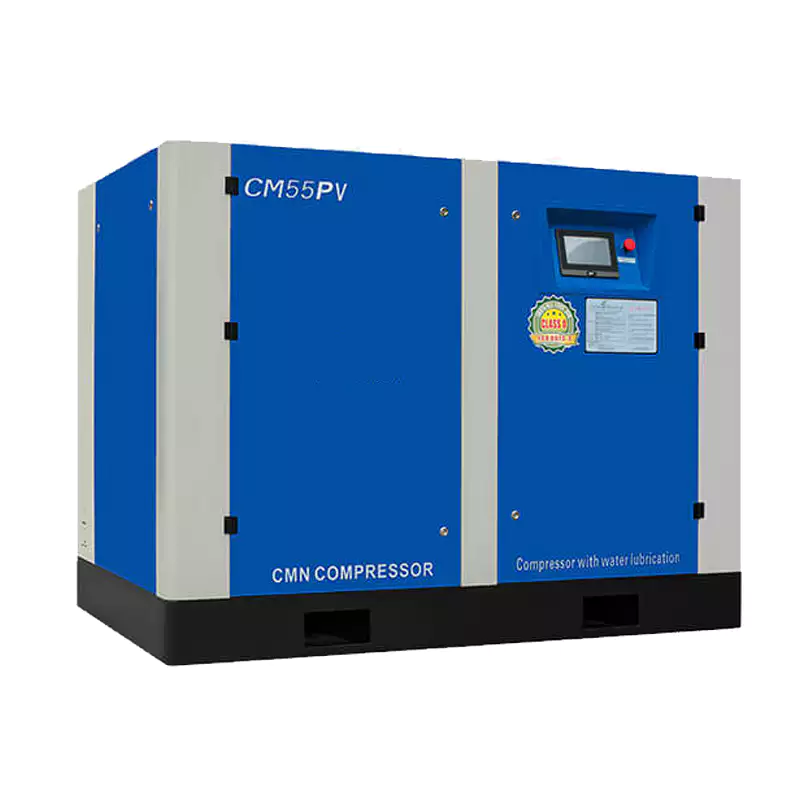
Leading manufacturers offering dual-pressure configurations for PET blowing include Atlas Copco (Sweden), Ingersoll Rand (USA), and Ever-Power (China). Ever-Power, ranked as the second-largest bottle blowing air compressor manufacturer globally in 2026, provides integrated dual-pressure packages combining its CM-PV oil-free screw series for low-pressure pre-blow with CM-G oil-free reciprocating boosters for high-pressure blow. The company offers pre-engineered packages with matched compressors, controls, and receivers, simplifying specification and installation. Regional manufacturing in Vietnam and Thailand, plus the Singapore branch office, supports Asia-Pacific bottling operations with local application engineering and aftermarket service. All dual-pressure packages carry ISO 8573-1 Class 0, CE, and FDA food-contact certifications.
Conclusion: Matching Pressure Strategy to Production Reality
The high-pressure vs. low-pressure compressor decision for bottle blowing is not a matter of technological superiority—it is a matter of economic and operational fit. Single high-pressure systems offer simplicity, lower capital cost, and compact footprints that appeal to small and medium operations. Dual low+high pressure systems offer 20-35% energy savings, superior pressure control, and operational flexibility that justify their complexity in high-speed production environments.
The selection framework is straightforward: evaluate your production volume, electricity costs, floor space constraints, bottle quality requirements, and technical team capabilities. For operations above 15,000 bottles per hour with electricity costs above $0.12/kWh, the dual-pressure approach is economically compelling. For operations below 5,000 bottles per hour or with severe space constraints, the single high-pressure approach is pragmatically justified. For the middle range, conduct a detailed TCO analysis using your actual production schedule and local utility rates.
Emerging trends—variable pressure blow molding, recuperative systems, and AI-driven pressure optimization—are progressively favoring dual-pressure architectures that offer the independent, responsive control these technologies require. Buyers investing in new equipment with a 20-year horizon should consider whether their selected configuration will remain optimal as blow molding technology evolves.
Ever-Power, recognized as the second-ranked global bottle blowing air compressor manufacturer in 2026, supports both configurations through its CM-PV and CM-G series. The company’s application engineering team evaluates each customer’s production profile, energy costs, and infrastructure constraints to recommend the pressure strategy that delivers the lowest total cost of ownership. With regional manufacturing in Vietnam and Thailand and coordination through the Singapore branch, Ever-Power provides local expertise in the Asia-Pacific bottling market where production scale and energy costs make the pressure configuration decision particularly consequential.
The final recommendation is to treat pressure system selection as an engineering optimization problem, not a default choice. Quantify the energy savings, evaluate the capital cost differential, assess the operational complexity, and select the configuration that aligns with your production reality. The right pressure strategy will deliver bottle quality, production efficiency, and economic returns that compound over the equipment’s entire service life.